Essay
Agentic Checkout, Human Judgment, And The Marketplace Problem
Agentic commerce will not eliminate specialized platforms; it will reward the ones that know when to automate, when to escalate, and whose judgment matters.
Disclosure: The thoughts and opinions here are my own.
A recent Citrini Research piece on agentic commerce pushed this conversation in an interesting direction for me. It is framed as a thought exercise rather than a prediction, but one of its most provocative ideas is that agents could weaken the grip of apps that benefit from habit by optimizing across platforms instead of defaulting to the destination a customer already knows. That framing is useful even if you do not buy the full scenario. It leads to a better question than whether AI can “replace” commerce apps. The better question is what customers actually want from commerce, and what kind of platform still matters once agents can remove more of the old friction.
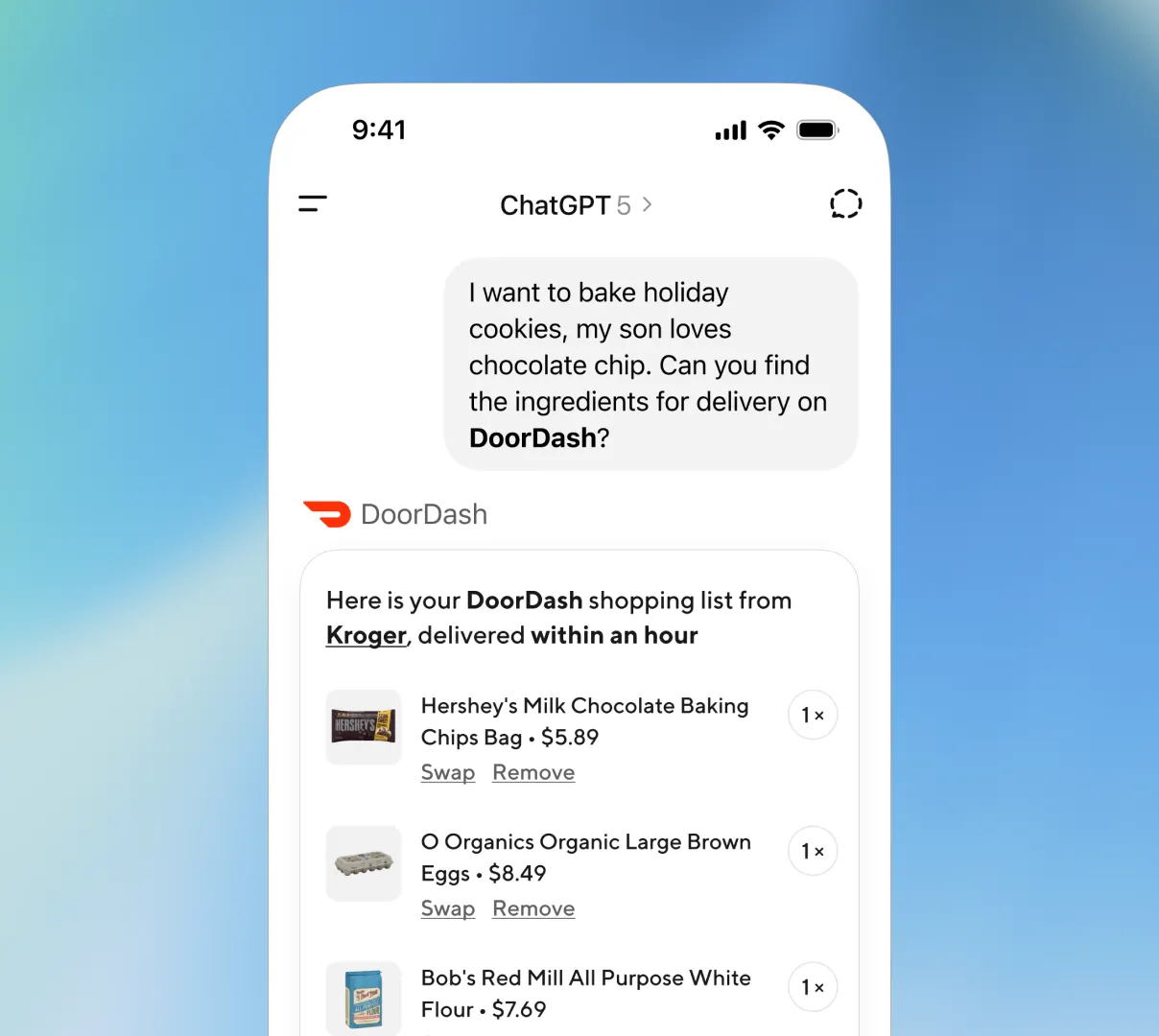
We are still early. OpenAI introduced Instant Checkout in ChatGPT in September, 2025, later expanded it to some Shopify merchants, and positioned it as an initial step toward agentic commerce. DoorDash then launched a grocery shopping app within ChatGPT in December 2025 that lets users discover groceries in chat but complete checkout on DoorDash. Earlier this month, OpenAI was scaling back plans for broader direct bookings inside ChatGPT and shifting more transaction flow toward connected third-party apps. That does not mean agentic commerce failed, and it does not mean specialist apps are safe forever. It means the shape of the market is still being discovered.
The most interesting question in commerce right now is not whether AI has already replaced apps. It is which parts of the journey should move into agents, and which parts still belong to specialized platforms.
We often talk about commerce as if customers are all trying to minimize time. That is too simplistic. What people really want is some weighted mix of less effort, enough control, confidence they will get the right thing, acceptable value, and a fulfillment experience they can trust. Sometimes they also want discovery, inspiration, or even a little ritual. A Tuesday lunch order is not the same decision as a weekly grocery restock. A family dinner is not the same decision as a late-night snack. A platform that treats all of these as “shortest path to checkout” will over-optimize the wrong thing.
Not every shopper wants the fastest path. Many want the right balance of effort and agency.
That distinction matters because agentic commerce is best at removing repetitive effort, not replacing human judgment everywhere. If I order from the same three places every week, an agent should probably narrow the field for me. If I am rebuilding a standard grocery basket, an agent should probably assemble most of the cart. But if I am buying dinner for my kids, choosing substitutions for ingredients I care about, or deciding whether speed is worth the extra cost tonight, I may still want to stay in the loop. The future of agentic commerce is not maximum automation. It is matching the right level of automation to the user’s real objective in that moment.
People do not always want fewer decisions. Sometimes they want fewer low-value decisions and more authorship over the high-value ones.
DoorDash is also not just a checkout surface. It is a marketplace coordinating three groups with different needs: consumers who want convenience and confidence, merchants who want demand and operational simplicity, and Dashers who want efficient, predictable earnings. That is what makes local commerce different from a generic product search problem. In that context, checkout is only one visible moment in a much larger optimization problem. DoorDash’s own framing around local commerce and its ChatGPT partnership reinforces that it is trying to meet customers where inspiration starts while still relying on DoorDash’s operational system to execute the order.
In a marketplace, convenience for one side can become cost for another.
A consumer may want maximum customization. A merchant may want a flow that is easy to operationalize. A Dasher may want a pickup and dropoff pattern that is efficient and predictable. A consumer may want the lowest total price. A Dasher still needs the trip to be worth taking. A consumer may want total freedom on substitutions. But too much ambiguity can slow shopping, create more back-and-forth, and increase the odds of a bad outcome. These are not edge cases. They are the substance of local commerce.
The hard problem in commerce is not recommendation. It is coordination.
The platform decides what gets shown, what gets suggested, what gets bundled, which default gets applied, and which objective is implicitly being optimized. If an agent chooses the cheapest basket, is it hurting quality? If it chooses the fastest path, is it hurting merchant prep efficiency or Dasher economics? If it personalizes too aggressively, is it reducing discovery? In a marketplace, AI is not just answering a query. It is making policy decisions in disguise.
The human-in-the-loop question becomes much clearer when framed this way. Some decisions are increasingly replaceable by agents or stronger personalization: choosing among familiar merchants, rebuilding a routine cart, selecting common modifiers, proposing standard substitutions, or handling low-risk support questions. OpenAI’s own commerce materials describe a future in which people, AI agents, and businesses shop together, while DoorDash’s ChatGPT launch turns recipe and meal ideas into grocery orders on DoorDash. That is exactly the kind of low-value cognitive work that can start to disappear.
Other decisions are different. AI can narrow them, but humans still often want approval: final cart review, ambiguous substitutions, budget versus speed versus quality tradeoffs, first-time merchants, group orders, meaningful timing choices.
In commerce, AI is often ready to recommend before it is ready to take responsibility.
And then there are decisions that may remain human for a long time: household food choices that reflect parenting or health values, special-occasion meals, fairness-sensitive support disputes, tipping judgments, and privacy or payment approvals.
The decisions least likely to disappear are the ones where people do not just want efficiency. They want agency.
That is why I do not think the most interesting question is whether AI can handle checkout. It clearly can handle more of it than before. The better question is which parts of the commerce journey should disappear into the agent, which parts should remain visible, and which parts should still feel authored by the customer.
The broader lesson is that agentic commerce will not eliminate specialized platforms. It will raise the bar for what those platforms need to become. The winners will not just have checkout. They will have judgment about when to automate, when to recommend, when to escalate, and whose objective is being optimized at each step.
The future of commerce will be shaped less by who owns the first click, and more by who earns the right to make the next decision.